
When you’re pregnant, you’ve reached a special milestone in your life, but it also creates a new question that you may want to ask yourself: Is it safe to fly while pregnant ? Traveling while pregnant is generally safe, although you have to prepare and stay informed, whether you are planning a leisurely babymoon or an important business trip. A common question many expectant mothers have is, can you fly while pregnant? There are certain airline policies, medical clearance, and travel safety measures to consider when flying while pregnant. Each airline has its own guidelines for gestational age, medical forms, and documentation, so traveling can quickly become a logistical nightmare.
What we’d like to do with this guide is to make that process easy. Take care of the travel arrangements, and make sure your journey is safe. Whether it’s checking the airline or making sure that you’re booking with safety regulations…your trip the entire way. In this guide, we break down everything you need to know about flying while pregnant.
What is the best time to fly during pregnancy?
The airline regulators do not treat all stages of pregnancy equally. Knowing what stage you’re at is the first step of planning your trip without any surprises at the airport.
The first trimester (Weeks 1-13)
In the first trimester, you can fly without any special documentation. Many women wonder, Is it safe to fly while pregnant during the first trimester? However, that early pregnancy can cause nausea, fatigue, and a heightened sensitivity to smells, which can make a long-haul flight challenging.
Health Note: Be aware that this stage can increase the chances of morning sickness, so talk to your doctor about a safe method to help prevent nausea before you leave.
The second trimester (Weeks 14-27)
This is viewed as the sweet spot for travel. Your energy returns, and there is minimal risk of complications. This answers most of the questions of when you can fly when you are pregnant with comfort. During this time, most airlines will not require medical documentation. It is an opportunity to finalize your journey.
The Third Trimester (Week 28 onwards)
During the third trimester, airlines focus more on safety. Understanding when can you not fly while pregnant is crucial as you approach your due date. From week 28 onwards, most carriers require you to carry a Fit-to-Fly certificate. If necessary paperwork is not presented, you may not be allowed to board at the gate.
Essential Medical Documentation: The Fit-to-Fly Certificate
Once you hit the 28-week mark, a medical note is your top travel document for flying while pregnant. It is a professional statement that your pregnancy is healthy and you are able to withstand the changes in cabin pressure.
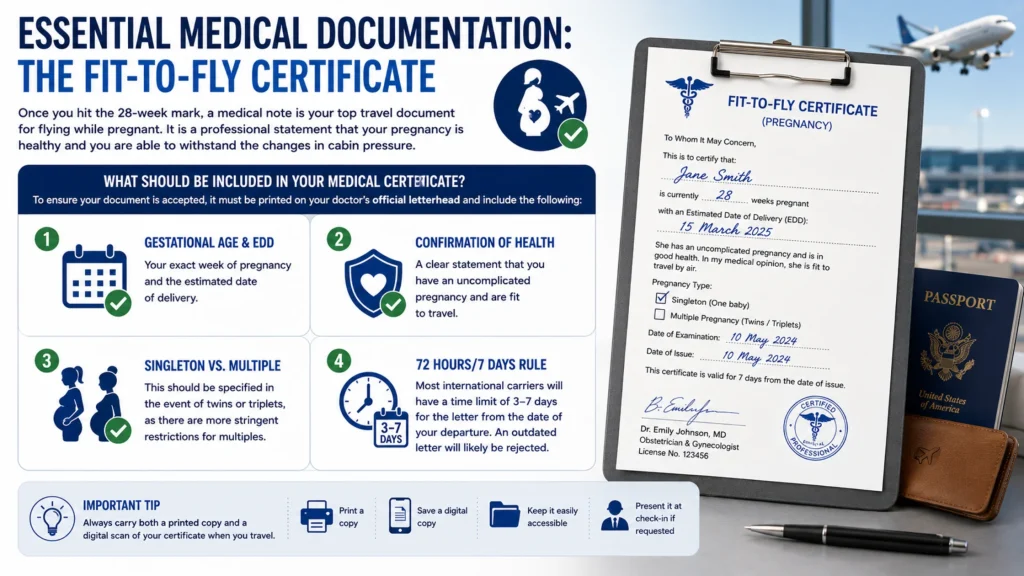
What should be included in your medical certificate?
To check if your document is accepted, it must be printed on the official letter and include the following:
- Gestational Age & EDD: Exact week of your pregnancy and the exact date of the delivery.
- Confirmation of Health: The clear statement that you have an uncomplicated pregnancy and you are physically fit to travel.
- 72 Hours/7 Days Rule: Most international carriers will have a time limit of 3-7 days for the letter from the date of your departure. An outdated letter will likely be rejected.
Read Also: – Airport Lounge Access
Airline-Specific Pregnancy Policies
Rules do not exist in all places when it comes to flying while pregnant. Understanding specific flying-while-pregnant rules helps avoid airport surprises. Some airlines may permit travel to week 36, while others may have more stringent requirements depending on the airline’s safety insurance.
| Airline | Medical Cert. Required | Max Week (Single) | Max Week (Multiples) |
| Air India | From 28 weeks | 36 weeks | 32 weeks |
| IndiGo | From 28 weeks | 32 weeks | 30 weeks |
| Emirates | From 29 weeks | 36 weeks | 32 weeks |
| British Airways | From 28 weeks | 36 weeks | 32 weeks |
| United Airlines | Generally not req. | 36 weeks | 36 weeks |
How does the MEDIF (Medical Information Form) work?
For a high-risk pregnancy, a standard note will not be enough. You will need to complete a MEDIF. This is a standard aviation document that is completed by your physician describing your particular medical history. This must be provided to the airline’s medical desk at least 48 to 72 hours prior to the flight for formal approval from the airline’s medical team.
Tips for In-Flight Comfort and Health
At 30,000 feet, your comfort and blood flow are important. flying while pregnant rules and safety guidelines for airline travel are vital for your comfort. Use this checklist to prepare for your journey and keep yourself feeling your best.
Safety rules for airline travel.
- Compression Stockings: Pregnancy naturally increases blood-clotting factors. To prevent deep vein thrombosis (DVT), a medical condition where blood clots are formed in deep veins in thighs or legs, wear medical-grade compression stockings.
- Move strategically: Walk down the aisle of the cabin every 60 minutes and do seated ankle circles to ensure good blood flow.
- Aisle Seating: Always opt for an aisle seat. This gives you the freedom to go to the washroom often and will allow you to stretch your legs without disturbing your seatmates.
- Hydration: Cabin air is extremely dry. Drink a lot of water before, during, and after your flight to avoid dehydration and swelling.
- Seatbelt Positioning: Safety is the priority. Always, always wear your seatbelt, but make sure the belt is low across the pelvis, under the bump, not across the abdomen.
Medical Indicators for Postponing Travel
Is it dangerous to fly while pregnant? There are some medical considerations that make travel potentially dangerous, even if the doctor has given permission. To minimize the risks of flying while pregnant, please consult your healthcare provider if you have any of the following conditions:
| Risk Factor | Why It Affects Travel |
| Placenta Previa | Higher risk of bleeding due to pressure changes. |
| Cervical Incompetence | Increased risk of preterm labor. |
| Severe Anemia | Hemoglobin below 8.5 g/dL reduces oxygen-carrying capacity. |
| Pre-eclampsia | High blood pressure poses a risk to both mother and baby. |
How to Find the Right Pregnancy-Specific Travel Insurance
Typical travel insurance policies can cover complications of pregnancy or the care of a newborn. When flying while pregnant, it’s important to have a policy that covers the following:
- Unexpected Complications: Medical emergencies that occur from the pregnancy.
- Emergency Evacuation: If you want to return home early or want a specialist medical transport
- Trip Cancellation: This covers the case when your doctor advises you not to travel due to a sudden change in your health.
What are the International Travel and Health Risks During Pregnancy?
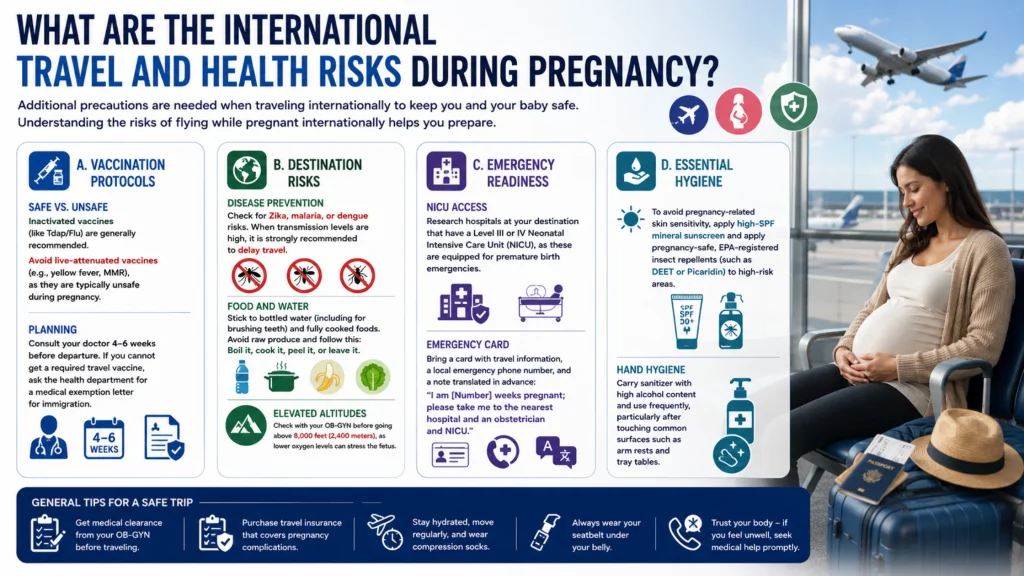
The precautions that are needed while travelling to keep you and your baby safe, understanding the risk of flying during the pregnancy, will help you to prepare yourself while flying internationally.
A. Vaccination Protocols
- Safe vs. Unsafe: The inactivated vaccines (like Tdap/Flu) are mostly recommended. Avoid the live vaccines (e.g., yellow fever, MMR), as they are typically unsafe for you during pregnancy.
- Planning: Consult your doctor 4–6 weeks before departure. If you cannot get a required travel vaccine, ask the health department for a medical exemption letter for immigration.
B. Destination Risks
- Disease Prevention: Check for Zika, malaria, or dengue risks. When transmission levels are high, it is strongly recommended to delay travel.
- Food and Water: Keep your water bottle with you, including for brushing your teeth and healthy food. Avoid the raw produce and follow this: firstly boil it, then cook it, peel it, and lastly leave it.
- Elevated altitudes: Check with your OB-GYN before going above 8,000 feet (2,400 meters), as lower oxygen levels can stress the fetus.
C. Emergency Readiness
- NICU Access: Research the hospitals at the nearest destinations that have a level III or IV neonatal intensive care unit (NICU), as they are equipped for the premature birth emergency.
- Emergency Card: Bring a card with travel information, a local emergency phone number, and a note translated in advance: “I am [Number] weeks pregnant; please take me to the nearest hospital and an obstetrician and NICU.
D. Essential Hygiene
- To avoid pregnancy-related skin sensitivity, apply high-SPF mineral sunscreen and apply pregnancy-safe, EPA-registered insect repellents (such as DEET or Picaridin) to high-risk areas.
- Hand Hygiene: Carry sanitizer with high alcohol content and use frequently, particularly after touching common surfaces such as arm rests and tray tables.
Read Also: – Where to Exchange Currency at Airport Without Paying Huge Fees
What Should Be Inside Your Pregnancy Travel Kit?
Before packing your bags and asking if I can fly during my pregnancy, check your travel kit if it is complete. Keep your kit in your carry-on bag.
A. Your Medical Passport
- Prenatal Records: The copies of your latest ultrasounds, blood work, and health history report.
- Emergency Card: Your blood type, allergies, any pregnancy complications, and your emergency contact details.
- Doctor’s Info: Your OB-GYN’s direct office and emergency contact numbers.
B. Medications
- Original Packaging: Store all vitamins and prescribed medicines in their original labeled pharmacy bottles.
- Prescription Copies: Carry a copy of your prescriptions that are signed by your doctor for customs and potential refills.
- First-Aid: Include the pregnancy-safe antacids, saline nasal spray (for the dry air) and electrolyte packets.
C. Nutrition & Skin Care
- Stable Snacks: Eat healthy food; don’t carry unhealthy foods. You have to manage your blood sugar and nausea.
- Skin Care: In your pregnancy kit, keep the pregnancy-safe moisturizer and lip balm to deal with the dryness.
Conclusion
Ultimately, flying while pregnant doesn’t have to be a stressful experience if you stay informed and come prepared. The secret to a pleasant flight is to plan your travel during the safe second trimester, get a valid Fit-to-Fly certificate if you are over 28 weeks, and ensure you know what your airline says. Hydration and circulation during your flight will help keep you healthy, and a travel bag dedicated to pregnancy will help you handle the details with confidence, while the right insurance will ensure you are covered in case something goes wrong. Safety and peace of mind are the utmost important thing, so take care of the paperwork beforehand, take your doctor’s advice, and have a safe and comfortable journey to your destination.
FAQs
Generally, you cannot fly once you reach your 9th month of pregnancy (specifically past 36 weeks for single pregnancies, or past 32 weeks for multiples). People often ask, “Can you fly while pregnant during the late stages?” and some airlines impose specific conditions, such as IndiGo, which has already suspended flights for 32 weeks.
Yes, flying in pregnancy is safe if your pregnancy is uncomplicated but you are in your third trimester and must obtain your fit-to-fly certificate from your doctor. For a 5-hour flight, you should also take the precautions like wearing the stockings, staying hydrated, and moving your legs.
Yes, you can fly without special airline documentation in the first few weeks of pregnancy. When you can fly while pregnant depends on your health, but early weeks are generally fine. You should be ready for some discomforts, though, such as tiredness, bad morning sickness, or nausea while flying.
The first trimester is the most dangerous (weeks 1-13). If you are worried about whether it is dangerous to fly while pregnant, the first trimester holds the highest risk of miscarriage because approximately 80% of miscarriages happen during this period, and the growing embryo is very susceptible to outside elements.
Read More: –